Updated: July 2026
What is the Best Time for a Komodo Liveaboard Sailing Trip?
- Peak underwater visibility, often exceeding 30 meters, occurs from June to August.
- The shoulder months of April-May and September-October present a superb balance of excellent weather, active wildlife, and fewer vessels.
- For the most significant manta ray aggregations, consider the transitional period from December to February.
The teak deck is warm underfoot, the air thick with the scent of salt and the distant, sweet perfume of frangipani blossoms from an unseen island. A canvas sail snaps taut overhead, the only sound besides the gentle lapping of the turquoise Flores Sea against the hull of your phinisi schooner. This is the sensory immersion that defines a voyage through the Komodo archipelago. But timing, as with any great expedition, is everything. The character of these 29 volcanic islands, the behavior of their famous dragons, and the clarity of their world-renowned waters shift dramatically with the monsoon winds. Pinpointing the perfect window for your journey isn’t just a matter of logistics; it’s the key to unlocking the specific Komodo experience you seek.
Decoding Komodo’s Two Distinct Seasons
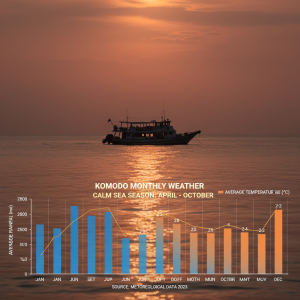
Unlike the four-season rhythm many of us are accustomed to, the climate across the Lesser Sunda Islands is a simpler, more primal duet of dry and wet. Understanding this fundamental duality is the first step in planning the ultimate Komodo liveaboard charter. The entire Komodo National Park, covering over 1,733 square kilometers of terrestrial and marine environments, is governed by the monsoon. From April through December, the southeast monsoon ushers in the dry season. This is the period most travelers target, and for good reason. You can expect long days of brilliant sunshine, minimal precipitation, and relatively calm seas, with average air temperatures hovering around a pleasant 30°C. These conditions are ideal for open-deck lounging, uninterrupted sailing, and dry landings for island treks. It’s worth noting that from June to August, these same winds can create choppier conditions in the southern reaches of the park, around Padar and Rinca, but they also bring cooler, nutrient-rich upwellings from the Indian Ocean, a phenomenon that ignites the marine food chain. Komodo’s climate is notably arid for Indonesia, receiving just 800-1000 mm of rain annually, concentrated in a few short months.
The wet season, ushered in by the northwest monsoon, typically runs from January through March. This period is often misunderstood. It doesn’t mean constant, dreary rain. More commonly, the pattern consists of bright, clear mornings followed by intense, dramatic, but often brief, afternoon downpours. The primary benefit of traveling during these months is the transformation of the landscape. The islands shed their dry, savannah-like appearance and explode into a vibrant, almost electric green. For photographers, this is a remarkable time. Furthermore, the park is significantly quieter, with far fewer boats vying for the prime anchorage spots. Water temperatures peak at a balmy 29°C, and while visibility might be slightly reduced, the diving remains world-class. Many charter operators, however, do schedule their annual vessel maintenance during the wettest part of this season, so availability can be limited.
The Peak Season Sweet Spot: June through August
For many, the months of June, July, and August represent the absolute zenith of the Komodo sailing experience. This is the heart of the dry season, a time when all the elements align to create what is widely considered the best time for a komodo liveaboard sailing adventure. The defining characteristic of this period, particularly for divers, is the astonishing water clarity. Driven by oceanic currents and minimal land runoff, underwater visibility frequently pushes past 30 meters, and on exceptional days, can approach an almost unbelievable 40 meters. At iconic dive sites like Castle Rock and Batu Bolong, this clarity transforms the experience, allowing you to witness the full, staggering scale of the marine biodiversity, from vast schools of fusiliers to patrolling grey reef sharks. Topside, the conditions are equally perfect. The sun is reliable but the humidity is lower than at other times of the year, making the celebrated sunrise trek to the viewpoint on Padar Island a more comfortable undertaking.
This period also coincides with the Komodo dragons’ mating season. From July through August, the males become more active and territorial, engaging in dramatic displays and sometimes even ritualistic combat. Guided tours with the park’s official rangers on Rinca or Komodo Island offer a higher probability of witnessing this fascinating behavior. This confluence of perfect weather and peak wildlife activity comes with a trade-off: popularity. These months constitute the high season for tourism in the UNESCO World Heritage site. The most famous bays and dive sites will have more vessels, and securing a premier charter requires booking well in advance—often 9 to 12 months out. However, the advantage of a bespoke Komodo Live Aboard Charter is the captain’s ability to leverage intimate local knowledge, adjusting the itinerary to find more secluded coves and timing dives to avoid the midday rush, ensuring a sense of exclusivity even amidst the high-season buzz.
The Shoulder Seasons: A Connoisseur’s Choice (April-May & September-October)
While the summer months get the most attention, seasoned travelers and dive professionals often point to the shoulder seasons as the true sweet spot. These transitional months—April and May, as the wet season cedes to the dry, and September and October, as the cycle reverses—offer a sublime balance of all the archipelago’s best qualities. In April and May, the islands are still radiantly green from the winter rains, creating a dramatic visual contrast with the sapphire-blue water. The seas are typically calm, and water temperatures are warm and inviting, averaging 27-28°C. Manta ray encounters remain frequent as the season changes, and you’ll find far fewer boats sharing the water with you. It’s a time of renewal and vibrant life, both above and below the surface.
Conversely, the period from September to October offers a different, but equally compelling, allure. The landscapes have taken on their iconic, arid, golden-brown hue, a stark and beautiful savannah aesthetic. The southeast winds have usually subsided, often resulting in exceptionally calm, glassy seas that are perfect for smooth sailing and paddleboarding in quiet bays. As our lead dive master, I Komang, often remarks, “October is my secret. The water is like a mirror, and you feel like you have the entire park to yourself.” This is also a prime window for cetacean sightings. Migratory routes for species like sperm whales, Bryde’s whales, and even the occasional blue whale pass through the region, and the calm conditions make spotting them far easier. For the discerning traveler, these months deliver a premium experience, combining excellent weather, prolific wildlife, and a welcome sense of solitude that is the ultimate luxury. Planning a Komodo private phinisi cruise during these periods often feels like a truly exclusive expedition.
Diving Deep: A Diver’s Calendar for Komodo
For the dedicated diver, choosing the best time for a Komodo liveaboard sailing trip is a more nuanced calculation, dictated by target species and preferred water conditions. The park is famously divided into northern and southern dive regions, each with its own microclimate and seasonal prime. The north, encompassing sites like Gili Lawa Laut, Crystal Rock, and The Cauldron, is characterized by warmer water (27-29°C) and is best dived from March through October when visibility is at its peak. This area is renowned for its thrilling currents, pristine hard coral gardens, and pelagic action, including blacktip and whitetip reef sharks, giant trevally, and Napoleon wrasse.
The south, including the legendary Horseshoe Bay on Rinca and sites around Nusa Kode, is a different world. Influenced by the deep, cool waters of the Indian Ocean, temperatures here can drop to a brisk 20-25°C, especially from June to August. This nutrient-rich upwelling, a result of the vast Indonesian Throughflow current, fuels an explosion of life. While visibility can be lower (10-15 meters), the sheer density of marine biomass is staggering. This is the place for rare critters, vibrant soft corals, and a different cast of characters. For manta ray enthusiasts, while sightings are possible year-round, the period from December to February is often considered “manta season,” when large aggregations gather at cleaning stations and feeding grounds. However, a well-planned itinerary will almost always include reliable manta encounters at any time of year. A 2019 census identified over 1,000 individual manta rays within the park, underscoring the health of this remarkable population.
Beyond the Dive Mask: Topside Considerations
While Komodo’s underwater realm is a primary draw, the experience aboard a luxury phinisi is just as much about the world above the waves. The timing of your trip profoundly affects these topside adventures. The Komodo dragons, for instance, are present year-round, and a skilled ranger can locate them in any season. However, their behavior shifts. The dry season, particularly the mating period of July and August, often sees more dynamic interactions. Later, from September to November, females guard their nests, which can make for interesting, albeit more stationary, viewings. For photographers and hikers, the choice is one of aesthetic preference. For the lush, verdant hillsides that cascade into turquoise bays, the period from January through May is unmatched. If you seek the classic, sun-baked savannah look for your trek up Padar Island—a 30-minute climb up some 819 steps to an elevation of 185 meters—then the drier months from June through November will provide that iconic golden palette.
The quality of other topside experiences can also be season-dependent. Stargazing, for example, is far more spectacular during the dry season’s clear, cloudless nights. Away from any significant light pollution, the Milky Way blazes across the sky with an intensity rarely seen elsewhere. The daily spectacle at Kalong Island, where tens of thousands of flying foxes depart at sunset, is a year-round phenomenon, largely unaffected by the season, save for the backdrop of a fiery dry-season sunset or a dramatic wet-season cloudscape. According to the official resource indonesia.travel, the diversity of experiences available makes the region a compelling destination throughout the year, but tailoring the timing to your interests is key.
Quick FAQ: Your Komodo Timing Questions Answered
When is the most affordable time to charter a liveaboard in Komodo?
Generally, the best value and greater availability can be found during the shoulder seasons (April-May, September-October) and the green season (January-March). The peak months of July and August command the highest rates due to premium demand and ideal weather conditions.
I am prone to seasickness. When are the calmest waters?
For the calmest sea conditions, plan your voyage for the transitional periods of April through early June, and again from September through November. During these times, the monsoon winds are at their weakest, often resulting in glassy, mirror-like seas perfect for smooth sailing. July and August can bring stronger winds, particularly in the southern part of the park.
Is it possible to see manta rays outside of the main “manta season”?
Absolutely. Komodo is home to a large, resident population of reef manta rays. While the period from December to February is known for large mating aggregations, key sites like Manta Point and Mawan offer highly reliable, year-round encounters. Your charter’s cruise director will know the best spots based on the tides and time of year.
Is a trip during the wet season (January-March) a bad idea?
Not at all. For travelers who prioritize solitude, lush green photography, and don’t mind the possibility of an afternoon shower, it can be a magical time. You will share the park’s iconic sites with a fraction of the visitors, and the landscape is at its most vibrant. A flexible itinerary on a private charter can easily work around the predictable rain patterns.
Ultimately, the “best” time is a personal equation, a balance of your priorities—be it diving visibility, landscape photography, solitude, or budget. The true luxury of a komodo live aboard charter is its inherent flexibility and the deep expertise of its crew, who can curate an extraordinary experience regardless of the calendar month. They know which bay will be sheltered from the wind, where the mantas are gathering this week, and which cove offers the most dramatic sunset. When you are ready to move from dreaming to planning, our atelier is here to help you design a voyage that aligns perfectly with your own ideal season. Explore our fleet and begin crafting your personal Komodo timeline today.